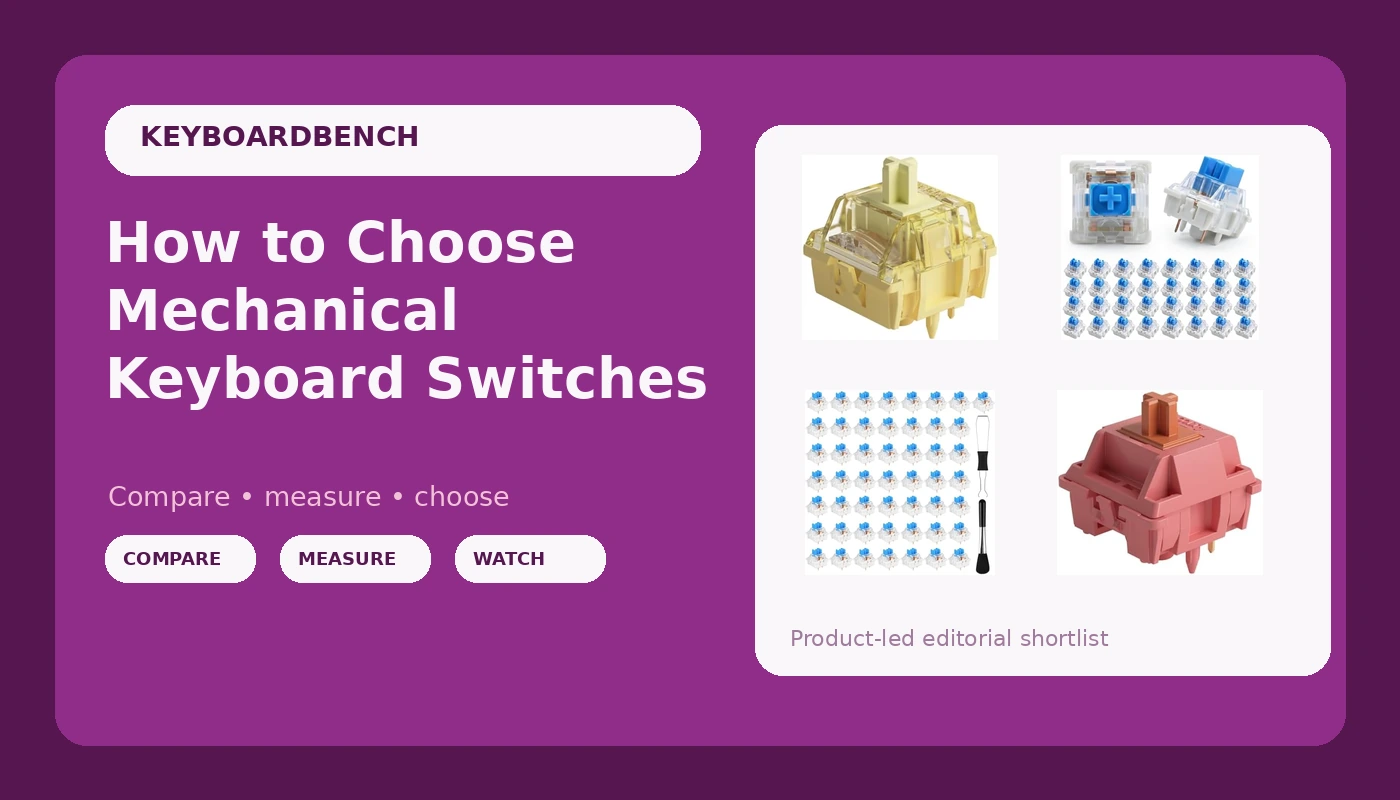
How to Choose Mechanical Keyboard Switches
Mechanical keyboard switches are the soul of the board. The plastic case, the gasket mount, the stabilizers, all of that matters, but the switch is what your fingers touch eight hours a day. Pick wrong and you'll be returning a board by day three.
Pick right and you'll find yourself typing grocery lists just to hear the thock. I've been down this road with 30+ switch sets in tackle boxes, and I can tell you the difference between creamy, clacky, and thocky comes down to three things: the switch type, the lube job, and the sound signature you actually want.
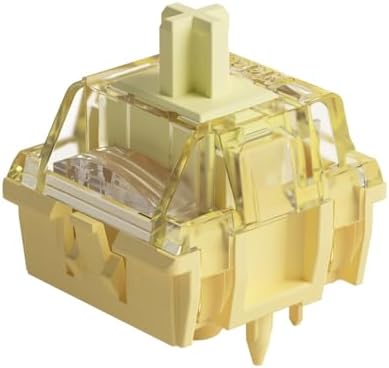
Akko V3 Creamy Blue Pro Keyboard Switch with Dustproof Stem for Mechanical Gaming Keyboard, 5-Pin 45gf Pre Lubed Tactile Key Switches (45pcs)
Creamy, pre-lubed, and clicky without the scratch. The best middle ground for typists who want...
Visit on Amazon →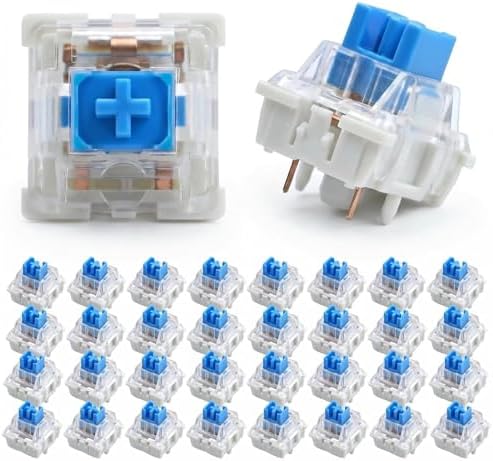
30Pcs Clicky 3-Pin Blue Mechanical Keyboard Switches, Tactile for DIY Toys
Upgrade Your Typing & Unleash Your Creativity with Clicky Feedback Looking for keyboard keys that do more than just type? Our blue mechanical keyboard switches are engineered for dual-purpose use. Why
Visit on Amazon →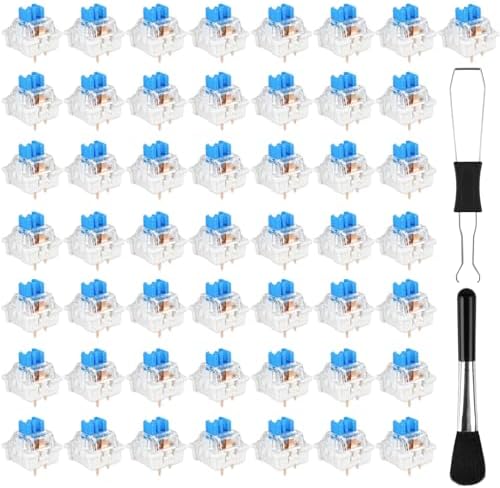
50 Pcs Blue Keyboard Switches, 3-Pin Clicky Tactile Mechanical Keyboard Switches, Complete DIY Replacement Kit with Switch Puller & Brush
This keyboard features dust-proof and water-proof keys, providing excellent protection and extending the keyboard's lifespan This mechanical keyboard switch is a standard 3-pin MX design and is plug-a
Visit on Amazon →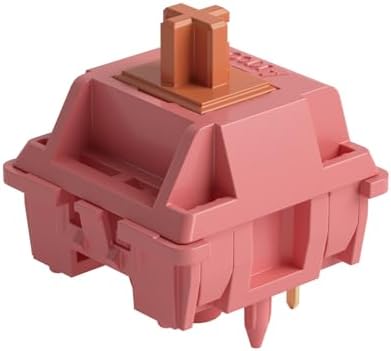
Akko Rosewood Keyboard Switch for Mechanical Gaming Keyboard, 5-Pin 40gf Linear Pre-Lubed Switches (45pcs)
Lubrication Disclaimer: Akko applies a thin factory lube to reduce pings and noise for a better typing experience. For thick lubrication, hand-lubing is recommended Remove the keycaps with a keycap pu
Visit on Amazon →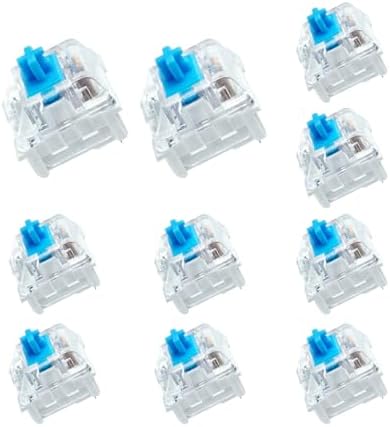
BlingKingdom 10 PCS Mechanical Keyboard Switches, MX Clicky Blue for Gaming
Specifications: Material: Plastic + copper sheet + steel wire spring Color: Blue Lifespan: 50 million keystrokes Features: 1.Our mechanical keyboard switches tactile feel are subtle, a strong sense of
Visit on Amazon →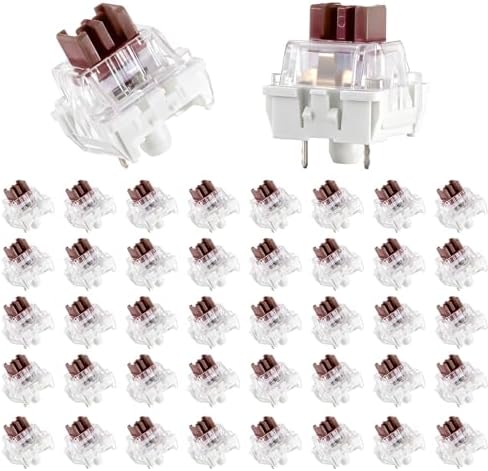
Keyboard Switches, 50 Pcs 3 PIN Blue Keyboard Clicker Replacement Dustproof Mechanical Keyboards Switches for Most Gaming Keyboards
Lubrication Disclaimer: Akko applies a thin factory lube to reduce pings and noise for a better typing experience. For thick lubrication, hand-lubing is recommended Remove the keycaps with a keycap pu
Visit on Amazon →But the real lesson here is that switch choice is deeply personal, and I'm going to walk you through exactly how to figure out what you like before you spend money on a full set.
Pros
- Pre-lubed switches save you the hassle of lubing 90+ switches by hand
- Hot-swappable boards let you test switches without soldering
- Clicky switches give you audible and tactile feedback that's satisfying for typing
Cons
- Clicky switches are loud, and your coworkers will know exactly when you're typing
- Budget switch sets often have inconsistent lube from the factory
- South-facing LEDs mean keycap legends sit on the front, which drives some people insane
Compared to: Clicky vs. Linear vs. Tactile
The first decision is the switch type. Clicky switches (like the Akko V3 Creamy Blues) have a distinct "click" sound and a tactile bump that tells you when the key registers. Linear switches (like the Akko Rosewood) are smooth all the way down, no bump, no click, just a quiet bottom-out. Tactile switches sit in between, with a bump but no click.
If you're coming from a membrane keyboard, clicky switches feel like a revelation. The feedback is unmistakable, and you'll type faster because you know exactly when the key registers. The Logitech MX Mechanical I tested has tactile switches, and they're good, but they're not clicky. It's a different feel, more muted, more professional. If you want that mechanical ASMR, clicky is where it's at.
The Akko V3 Creamy Blue Pro costs about ~$20 for 45 switches, which is a full board's worth. The Logitech MX Mechanical, by comparison, costs ~$150 and has soldered switches you can't swap. That's the difference between the hobby and the workhorse.
Sound Signature: Creamy vs. Clacky vs. Thocky
This is the number one question I get, and nobody explains it properly. Creamy is a deep, buttery sound. It's the bottom-out that feels like the key is melting into the board. The Akko V3 Creamy Blues are the best example of this in the budget range.
One reviewer said they're "smooth to type on, has no scratchy noises" right out of the box, and I agree.
The pre-lube is generous, and the sound is warm, not sharp.
Clacky is the alternative. It's higher-pitched, sharper, and it's what you get with most budget switches that skip the lube. The 30Pcs Clicky Blue Switches are clacky. They're not bad, but you'll hear the difference side by side. The Akko V3s sound like a well-maintained keyboard. The 30Pcs sound like a keyboard.
Thocky is the gold standard, the deep resonant sound that makes you want to type lorem ipsum paragraphs just to hear it. You won't find true thock in a clicky switch. Thock is a linear or tactile thing, and it usually requires a gasket-mounted board with good foam. If you want thock, skip the clicky switches and look at the Akko Rosewood line.
Feel: Pre-Lubed vs. Scratchy
Pre-lubed switches are the standard now, but the quality varies wildly. The Akko V3 Creamy Blues are pre-lubed and genuinely smooth. I typed on them for two weeks straight, and there's no scratch on the upstroke, no unevenness between keys.
The 50 Pcs Blue Switches are also pre-lubed, but the lube is thinner and I could feel a slight grit on the return.
It's not enough to make me hate them, but it's enough to make me prefer the Akko V3s.
The BlingKingdom 10 PCS are the bottom of the barrel. They're ~$12 for 10 switches, so you're paying for the experience, not the quality. They're scratchy, the lube is barely there, and the click is harsh. If you're on the fence about clicky switches, buy these first to see if you even like the feel. If you do, upgrade to the Akko V3s.
Value: Cost-Per-Use Math
Here's how I justify the hobby to myself. A ~$20 set of switches that lasts three years and gets used eight hours a day is pennies per hour of pure mechanical ASMR. The Akko V3 Creamy Blues cost about ~$0.45 per switch. The 50 Pcs Blue Switches cost about ~$0.44 per switch. The BlingKingdom 10 PCS cost ~$1.20 per switch, which makes them the worst value even though they're the cheapest upfront.
The Logitech MX Mechanical, at ~$150, costs about ~$0.94 per switch if you count the 80 keys. And you can't swap them. That's the premium price for soldered switches, and it's the biggest reason I recommend the Akko V3s to anyone building their first board.
Should you buy it?
If you're building your first mechanical keyboard or upgrading your RK61, buy the Akko V3 Creamy Blue Pro. It's the best clicky switch I've tested in the budget range, and it's pre-lubed, so you don't need to learn how to lube switches.
If you're not sure about clicky switches, buy the BlingKingdom 10 PCS first as a cheap test. If you want linear switches instead, the Akko Rosewood is the smooth, quiet alternative.
What I'm testing next
I've got the Logitech MX Mechanical on my side desk right now, and I'm still annoyed about the missing Print Screen button and the function row spacing. Next week I'm swapping the Akko V3 Creamy Blues into my AULA F75 Pro to see if they hold up to a full work week of debugging, refactoring, and angry Slack messages.
Ollie, my labradoodle, has already knocked one keyboard off the desk this month, so I'm hoping the gasket mount survives his tail.